
Dr. Alparslan Demir · Obstetrics and Gynaecology
NST (non-stress test) can raise an anxious question: “What if my baby does not move during the recording?” I start by explaining why the test is being considered and how your pregnancy stage affects interpretation. NST helps assess your baby’s wellbeing at that time; it is not a diagnostic test that rules out every condition.
When does testing start, and how often is it repeated?
Not every pregnancy needs routine NSTs from a fixed week. For many pregnancies needing planned surveillance because of risk, testing may begin around 32 weeks; some circumstances require earlier assessment. Hypertension, certain diabetes situations, growth restriction, reduced movements and advancing gestation can affect the plan. Weekly or twice-weekly testing may be appropriate in some high-risk pregnancies, but this is not a universal schedule. I reconsider the interval if symptoms or findings change. ACOG: Individualised fetal surveillance Clinical reference: Antenatal surveillance
What will I feel during the test?
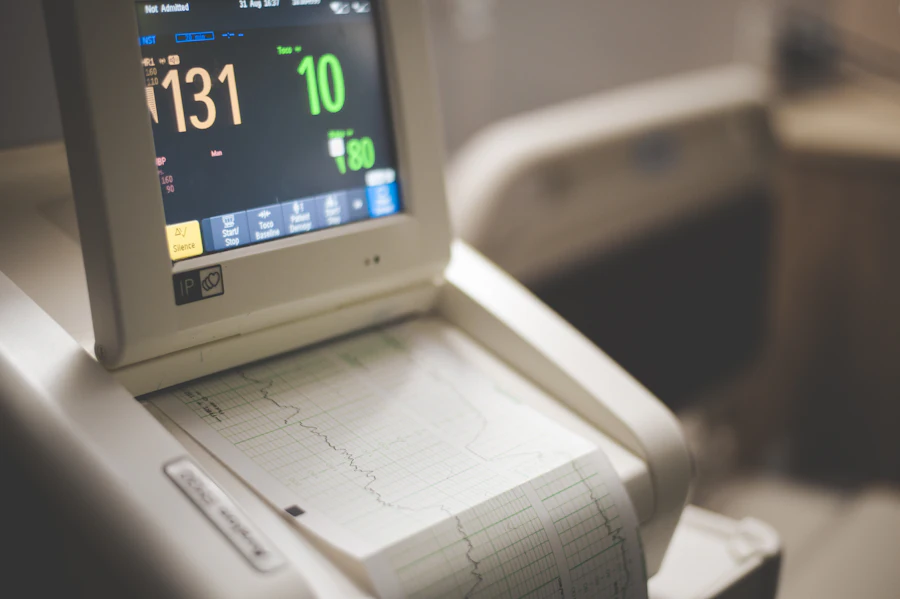
Two sensors are held against your abdomen with belts while you rest in a comfortable reclining or side-lying position. One records the baby’s heart rate; the other records uterine activity. You may notice gel and gentle belt pressure. There are no needles, and contractions are not induced for an NST. You may be asked to press a button when you feel movement. Recording often starts with 20 minutes and may extend to 40 minutes to allow for a sleep cycle. MedlinePlus: The NST procedure Clinical reference: Recording duration
What does reactive mean?
It means the expected heart-rate accelerations, appropriate for gestational age, were seen. This is generally reassuring for that assessment. I also review the baseline rate, variability and any slowing of the heartbeat. A reactive result is not a guarantee that no problem will develop before birth.
What if the result is non-reactive?
The expected accelerations were not sufficiently demonstrated. Sleep, gestational age and some medicines can contribute. This finding alone does not establish injury or mean an immediate caesarean is needed. The recording may be extended or followed by reassessment, an ultrasound biophysical profile and a fluid assessment. Concerning heart-rate changes require prompt clinical attention. MedlinePlus: Understanding results
Questions you may want to ask
What happens if my baby does not move during the NST?
We check whether the recording is adequate and whether a sleep period may explain the finding. Longer monitoring or further assessment may be needed. Tell the team before testing if movements have actually reduced.
Yesterday’s NST was normal, but movements are reduced today. Can I wait?
No. Contact your maternity unit immediately about a clear reduction or change from your baby’s usual movement pattern. Do not wait until the following day because an earlier test was normal. A home heartbeat device or waiting after a sugary drink is not a substitute for assessment. RCOG: Changes in your baby’s movements
Can the NST tell me whether labour has started?
It may record uterine activity, but the recording alone does not diagnose labour. Your symptoms and, when needed, examination are assessed together.
Before you leave, I explain the result in plain language, the next planned review and the symptoms that should prompt earlier contact.
Related pregnancy guides
- Level 2 Ultrasound: Detailed Anomaly Scan in Istanbul
- Prenatal Testing: NIPT, Combined, Triple and Quad Screening
- Pregnancy follow-up (Turkish)
For an individual assessment and an appointment, contact the practice (contact page in Turkish).
You do not need to send detailed health information or test reports just to request an appointment. Personal data information (Turkish)
This page provides general health information and does not replace individual medical advice. The need for examination, biopsy or treatment is determined through clinical assessment.
Medical content lead: Op. Dr. Alparslan Demir
Obstetrics and Gynecology Specialist. Specialist training: Taksim Training and Research Hospital. Following compulsory service in Şanlıurfa, he worked at Medicana International Istanbul and Avicenna Hospital. He has practised at his private office in Şişli since 2014. Education and professional background (Turkish).