
OVARIAN HEALTH · ŞİŞLİ, ISTANBUL
An endometrioma diagnosis raises questions beyond the size of a cyst: what it looks like, whether it contributes to pain and how it fits with your plans for pregnancy.
Quick answer
An endometrioma is an ovarian cyst associated with endometriosis. It is often called a “chocolate cyst” because it contains old blood. Not every endometrioma needs immediate surgery. Symptoms, imaging, age, ovarian reserve, previous operations and pregnancy goals guide the plan.
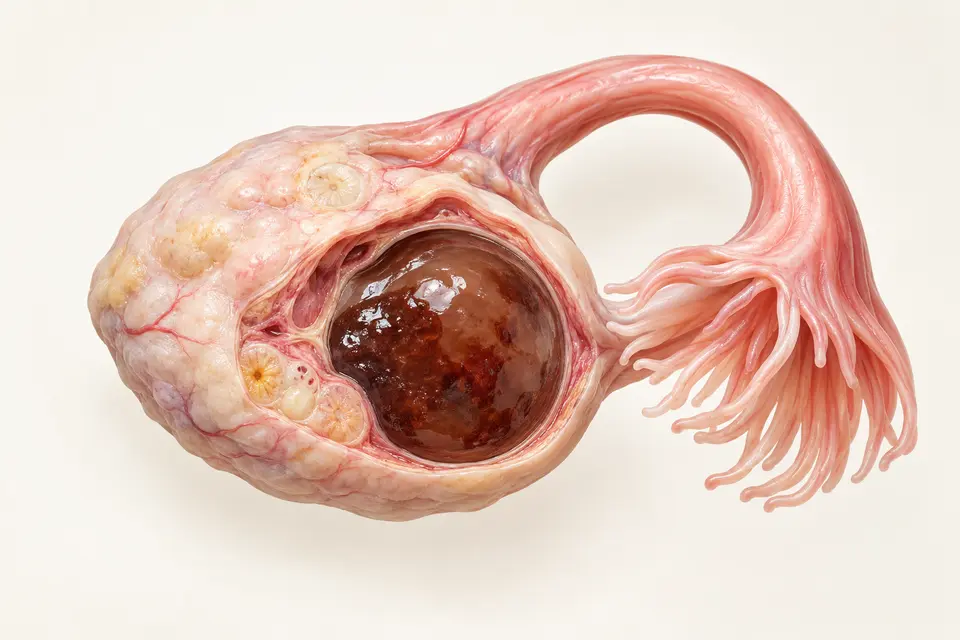
Is every blood-filled ovarian cyst an endometrioma?
No. Other cysts, including haemorrhagic cysts, may also contain blood. Assessment considers the cyst’s internal appearance, wall, blood flow and other ultrasound features. Changes over time or additional imaging may help clarify the diagnosis.
Some functional cysts resolve over a few menstrual cycles. The same cannot be assumed for an endometrioma; having a period does not mean the cyst has disappeared. An endometrioma also does not prove that endometriosis is confined to the ovary. Symptoms and examination findings may prompt assessment for disease elsewhere, including deep endometriosis.
Symptoms: the cyst may be silent, or only part of the picture
Some endometriomas are found incidentally. Others occur alongside painful periods, pelvic pain, deep pain during sex or difficulty conceiving. Cyst size and pain severity do not always match.
Focusing only on the cyst may overlook adhesions, other endometriosis lesions, adenomyosis or other causes of pelvic pain. Even if a cyst becomes smaller or is removed, not every symptom will necessarily improve to the same extent.
Monitoring without surgery: what is checked?
If monitoring is appropriate, your plan should specify when to return and which changes need earlier assessment. There is no single follow-up interval suitable for everyone. Symptoms, previous treatment and the features of the disease all matter. Choosing monitoring does not mean that the cyst will inevitably grow.
- Imaging: Size and internal appearance are compared with earlier examinations, including any new or suspicious features.
- Symptoms: The effect of pain on daily life, new symptoms and the benefits of current treatment are reviewed.
- Pregnancy plans: A change in your goals may change the balance between waiting, treatment and surgery.
Bring previous ultrasound images and reports, as well as any operation records. Ask: “Which changes should make me contact you before my next scheduled appointment?”
When does a chocolate cyst need surgery?
There is no universal size threshold that determines surgery for every patient. Size is considered alongside ultrasound appearance, growth or structural change, pain, menopausal status, pregnancy plans and previous operations. “Small means harmless” and “large means surgery” are not adequate decision rules.
When monitoring may be considered
Selected patients with reassuring features and no significant symptoms or other reason for intervention may be monitored, with an agreed review plan.
When surgery needs discussion
Persistent pain despite treatment, suspicious or changing imaging, specific fertility-treatment needs or concern about an acute complication may bring surgery into consideration. Benefits and possible effects on the ovary must be weighed together.
A 3, 5 or 7 cm endometrioma: what does size mean?
These measurements alone cannot provide an individual surgical recommendation. Two people with cysts of the same size may need different plans.
| Factor | Why it matters |
|---|---|
| Pain and quality of life | Symptoms that continue despite treatment may make surgery worth discussing. |
| Ultrasound appearance | Suspicious or changing features require assessment beyond a size measurement. |
| Ovarian reserve and previous surgery | The possible effect of another operation on healthy ovarian tissue matters. |
| Pregnancy and IVF plans | The order of monitoring, surgery and fertility treatment is individualised. |
This table helps you understand a recommendation; it is not a tool for choosing treatment without assessment.
Can medication shrink an endometrioma?
Suitable hormonal treatments may help control pain and, in some patients, reduce cyst size. They cannot be promised to make every endometrioma disappear. Symptoms and imaging findings are assessed separately.
Treatment must fit your medical history and pregnancy goals. Be cautious about herbal products, supplements or “cyst-dissolving” remedies that promise certain results. Tell your doctor about any products you take so possible interactions can be considered.
What should treatment achieve?
Combined hormonal options or progestogens may be considered for endometriosis-related pain, depending on suitability and side effects. Other hormonal options may be appropriate in selected cases. Do not start a medicine or choose a dose from online information.
Pain relief and cyst shrinkage are different outcomes. Discuss the intended benefit, how it will be reviewed and which side effects to report. If you want to conceive, hormonal suppression for pain control and fertility planning need separate consideration: these medicines are not prescribed to improve the chance of becoming pregnant.
AMH, ovarian reserve and cysts in both ovaries
Endometriomas and ovarian reserve are an important part of the discussion. Surgery can also affect healthy ovarian tissue. Decisions deserve particular care when both ovaries are involved, you have had previous cyst surgery or there are signs of reduced reserve.
When appropriate, AMH and an ultrasound antral follicle count can contribute to assessment. AMH does not measure egg quality by itself or determine whether natural conception is possible. It is interpreted alongside age, ultrasound findings and your reproductive history.
Before surgery, discuss both removal of the cyst and preservation of healthy tissue and reproductive options. A low AMH result alone is not a reason to operate.
Does an endometrioma have to be removed before IVF?
No. Routine surgery solely to improve IVF live-birth rates is not recommended. Separate reasons, such as pain, suspicious findings or difficulty accessing follicles during egg collection, may justify considering surgery.
Planning for natural conception and deciding about surgery before IVF are different questions. Age, reserve, tubal factors, sperm assessment, time trying to conceive and previous operations all contribute. Fertility treatment may take priority in some patients; a surgical indication may take priority in others.
For selected people with bilateral or recurrent disease, egg or embryo freezing may be discussed. It is not necessary for everyone and does not guarantee a future pregnancy.
How does wanting a pregnancy change the assessment?
An endometrioma diagnosis does not replace a full fertility assessment. Age, the length of time you have been trying, ovulation, tubal assessment where appropriate and your partner’s sperm assessment are considered together. Known endometriosis may justify assessment before the usual waiting period has passed.
With bilateral or recurrent cysts, the sequence of another operation and fertility treatment is especially important. Surgery may relieve some symptoms but may also reduce ovarian reserve. Discuss the expected benefit, possible tissue loss and alternatives before deciding.
Tell your doctor when you hope to become pregnant and bring details of previous attempts and treatments. A low AMH result should not be interpreted on its own as “pregnancy is impossible”.
Does a raised CA-125 mean a chocolate cyst or cancer?
CA-125 should not be used on its own to diagnose endometriosis. It is interpreted alongside examination and imaging findings. An elevated result alone is not a cancer diagnosis.
Can an endometrioma return after surgery?
Yes, an endometrioma can recur. If you are not planning pregnancy immediately, suitable long-term hormonal treatment may be discussed to reduce recurrence and associated symptoms. Your plan should be reviewed if your pregnancy goals change.
A new cyst does not automatically mean another operation. Previous surgery, current symptoms, imaging and ovarian reserve all matter. Bring your previous operation and pathology reports to the consultation.
Which changes need earlier assessment?
New or worsening pain, changes in the cyst’s appearance, a new solid area or an ovarian mass after menopause may need more detailed assessment. Endometriomas are usually benign, but new findings should not automatically be attributed to the existing diagnosis.
Frequently asked questions
Is a chocolate cyst cancer?
An endometrioma is usually benign. Suspicious imaging or clinical changes need separate assessment; the label alone cannot rule out every risk.
Does low AMH mean I must have surgery?
No. Low AMH alone is not an indication for surgery. The potential effect on reserve is particularly important when deciding the order of treatment.
Can I become pregnant with an endometrioma?
Pregnancy may be possible. Your individual chances depend on age and other reproductive factors, not simply the presence of a cyst.
Sources and limitations
This guide provides general patient information. Research and guidelines do not replace an individual diagnosis or treatment plan, particularly when considering surgery.
- ESHRE — Endometriosis guideline (2022)
- Endometrioma, cystectomy and ovarian reserve — critical appraisal of systematic reviews (2024)
- Cochrane — Excision versus ablation for endometrioma (2024)
- NICE NG73 — Diagnosis and management
- RCOG — Endometriosis patient information
- RCOG — Endometrioma surgery and fertility (reviewed 2025)
- ASRM — Fertility evaluation (2021)
Discuss your results in English in Istanbul
Consultations with Dr. Alparslan Demir are conducted directly in English. Bring previous ultrasound and MRI images and reports, operation records, pathology results and a list of medicines. Your symptoms and pregnancy plans help guide the next steps.
The practice is in Şişli, Istanbul. For directions, appointment planning and information about visiting from abroad, see the international patient guide.
For urgent symptoms, seek emergency medical care rather than waiting for an online appointment or message reply.